Los Haitises National Park: Complete Guide to Samaná's Natural Wonder
The Dominican Republic is famous for its beautiful beaches, tropical landscapes and fascinating cultural heritage. However, beyond its coastline lies another remarkable destination that showcases the country's extraordinary natural diversity: Los Haitises National Park.
Located in the northeastern part of the Dominican Republic, close to the Samaná Peninsula and Sabana de la Mar, Los Haitises is one of the country's most important protected natural areas. It is recognised for its dramatic limestone formations, extensive mangrove forests, tropical rainforest, coastal wetlands, caves and diverse birdlife.
The name Los Haitises comes from the Taíno language and is commonly translated as "mountainous land." Its distinctive landscape combines forest-covered limestone hills, small islands and waterways, creating scenery unlike many other destinations in the Caribbean.
Whether you are interested in nature, geography, biodiversity, Indigenous history or environmental conservation, this complete guide introduces the features that make Los Haitises National Park such an extraordinary part of the Dominican Republic.
1. Where Is Los Haitises National Park Located?
Los Haitises National Park is situated in northeastern Dominican Republic, around Samaná Bay. Its protected landscape extends across parts of several provinces, including Samaná, Hato Mayor and Monte Plata.
The park is geographically connected to a wider landscape of coastal ecosystems, tropical forests and wetlands.
Its location makes it an important natural area for understanding the environmental diversity of northeastern Dominican Republic.
The nearby communities of Samaná, Sánchez and Sabana de la Mar are associated with the surrounding region. These communities also form part of the area's cultural and economic landscape.
Los Haitises is not simply a collection of attractive natural viewpoints. It is a protected ecosystem that supports wildlife, preserves important geological formations and safeguards cultural heritage.
2. What Makes Los Haitises National Park Special?
Los Haitises stands out because several different natural environments exist within one protected landscape.
Its most recognisable characteristics include:
- Dramatic limestone hills known as mogotes.
- Extensive mangrove forests.
- Tropical rainforest vegetation.
- Coastal wetlands and small islands.
- Natural cave systems.
- Important bird habitats.
- Taíno archaeological and cultural heritage.
The Dominican Republic's official tourism authority describes Los Haitises as covering approximately 1,600 square kilometres and highlights its limestone formations, mangroves, bird colonies and caves.
These features make the park an important destination for understanding Caribbean natural history and biodiversity.
3. The Famous Limestone Formations: Mogotes
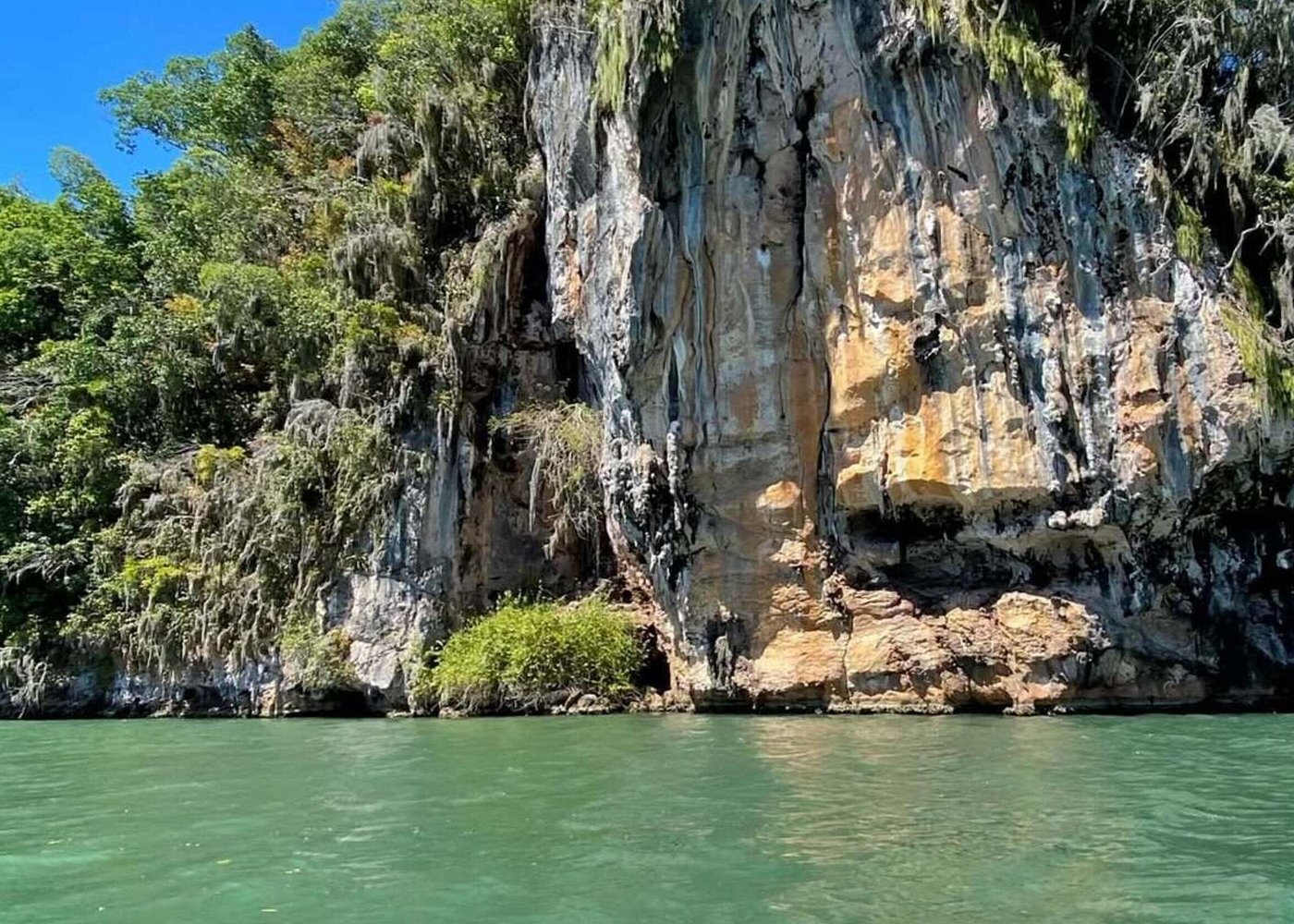
One of the most distinctive features of Los Haitises is its collection of limestone hills known as mogotes.
These rounded and sometimes steep-sided formations rise dramatically above the surrounding vegetation and water.
They developed through long geological processes involving limestone, rainfall, erosion and the gradual dissolution of rock.
How Were the Mogotes Formed?
The landscape of Los Haitises is part of a geological environment known as karst.
Karst landscapes develop when water gradually dissolves soluble rocks, particularly limestone.
Over long periods, rainwater interacts with the rock and creates unusual surface and underground features.
These geological processes contribute to:
- Rounded limestone hills.
- Natural cavities and caves.
- Underground drainage systems.
- Irregular rocky landscapes.
- Distinctive coastal formations.
The result is a landscape that looks almost like a collection of green islands rising from the water.
Why Are These Formations Important?
The mogotes are important not only because of their appearance but also because they help define the park's unique ecological environment.
Their slopes and surrounding vegetation provide habitats for different plants and animals.
They also contribute to the park's geological significance, making Los Haitises an interesting subject for environmental and geological study.
4. Mangrove Forests: The Green Heart of Los Haitises
Mangrove forests are among the most important natural features of Los Haitises National Park.
These specialised trees grow in coastal environments where freshwater and saltwater interact.
Their complex root systems create habitats for numerous organisms and help maintain the stability of coastal ecosystems.
Main Types of Mangroves
Four commonly recognised mangrove species are associated with Caribbean coastal environments.
Red Mangrove
Red mangroves are recognised by their distinctive supporting roots, which extend from the trunk and branches towards the water and muddy ground.
Black Mangrove
Black mangroves have specialised root structures that help them obtain oxygen in waterlogged soils.
White Mangrove
White mangroves generally grow in areas that are less frequently flooded than some other mangrove environments.
Buttonwood
Buttonwood is another coastal tree associated with mangrove communities and nearby saline environments.
Why Are Mangroves Important?
Mangroves provide several essential environmental benefits.
- Coastal protection: Their root systems help stabilise shorelines and reduce erosion.
- Wildlife habitats: Mangroves provide shelter and feeding areas for birds, fish and other organisms.
- Marine ecosystem support: Their environments serve as important nursery habitats for aquatic species.
- Carbon storage: Mangrove ecosystems store significant amounts of carbon.
- Water quality: Their natural systems help retain sediments and support coastal ecological processes.
Protecting mangroves is therefore essential for maintaining the environmental balance of Los Haitises.
5. Tropical Rainforest and Plant Diversity
Los Haitises also protects important areas of tropical rainforest.
The region receives substantial rainfall, supporting dense vegetation and a humid natural environment.
Its forests contain different types of plants, trees, shrubs, climbing vegetation and other organisms adapted to tropical conditions.
Characteristics of the Rainforest
Visitors and nature researchers may recognise several features of tropical forest environments:
- Dense vegetation.
- Tall trees and layered forest canopies.
- Humid conditions.
- Shaded forest floors.
- Climbing plants and epiphytes.
- Rich habitats for birds and insects.
The combination of limestone terrain, high rainfall and varied habitats contributes to the region's ecological diversity.
Why Forest Conservation Matters
Tropical forests help regulate local environmental conditions and provide habitats for native wildlife.
They also contribute to soil protection, water regulation and carbon storage.
Deforestation and habitat disturbance can threaten these benefits. Protecting forest environments is therefore a central part of preserving the natural character of Los Haitises.
6. Wildlife and Biodiversity in Los Haitises
Los Haitises is an important area for wildlife conservation in the Dominican Republic.
Its mixture of forests, wetlands, mangroves, caves and coastal habitats supports numerous bird species and other wildlife.
Birds of Los Haitises
Birdlife is one of the park's most remarkable natural features.
Species associated with the wider region include:
- Ridgway's hawk.
- Hispaniolan woodpecker.
- Sierra woodpecker.
- Brown pelican.
- Herons.
- Egrets.
- Other resident and migratory birds.
The endangered Ridgway's hawk is particularly significant because it is an important conservation species found on Hispaniola.
Why Is Bird Diversity Important?
Birds contribute to the balance of natural ecosystems in several ways.
They help control insect populations, distribute seeds and contribute to ecological processes.
Some species are also indicators of environmental health. Changes in bird populations can provide useful information about habitat quality and ecosystem conditions.
Protecting Native Wildlife
Wildlife conservation is essential to maintaining the park's ecological value.
Visitors should avoid disturbing animals, feeding wildlife or removing natural materials.
Keeping a respectful distance from birds and other animals helps protect their natural behaviour.
7. Caves and Taíno Cultural Heritage
Another important feature of Los Haitises is its collection of natural caves.
These caves are significant because they combine geological history with evidence of Indigenous Taíno culture.
The Taíno were among the Indigenous peoples of the Caribbean before European colonisation.
Their cultural heritage remains an important part of the Dominican Republic's historical identity.
Taíno Pictographs and Petroglyphs
Some caves in the region contain pictographs and petroglyphs associated with Taíno heritage.
Pictographs are images or symbols created using pigments on rock surfaces.
Petroglyphs are designs carved or engraved into rock.
These markings provide valuable evidence of Indigenous artistic and cultural expression.
They also demonstrate that the caves were meaningful places within the region's historical landscape.
Important Cave Names
Official information about Los Haitises identifies several notable caves and sites, including:
- Cueva de la Arena.
- Cueva de San Gabriel.
- Cueva de la Línea.
These locations form part of the park's geological and cultural heritage.
Important 2026 visitor update: On June 23, 2026, the Dominican Republic's Ministry of Environment announced the temporary closure of Cueva de La Línea because the access pier required specialised repairs. The Ministry stated that the closure would remain in place until visitor access could be made safe. Check the Ministry's latest announcement before relying on any older visitor information about this cave.
Visitors should never enter closed or restricted heritage areas.
8. San Lorenzo Bay and the Coastal Landscape
San Lorenzo Bay is an important geographical feature associated with Los Haitises.
Its coastal environment includes water channels, mangrove habitats, small islands and distinctive limestone formations.
The relationship between the sea and the surrounding forest creates a complex ecosystem.
Why Is the Bay Important?
Coastal environments such as San Lorenzo Bay support different ecological processes.
They provide habitats for birds and other wildlife, connect marine and terrestrial ecosystems and contribute to the environmental importance of the region.
The bay also helps define the visual identity of Los Haitises.
Its combination of forest-covered limestone formations and coastal vegetation creates one of the most recognisable natural landscapes in northeastern Dominican Republic.
9. Why Is Los Haitises a Protected National Park?
Los Haitises is protected because of its exceptional natural and cultural importance.
Its ecosystems support biodiversity, preserve geological features and protect valuable historical resources.
The park's protection dates back to the 1970s, and it is recognised within the Dominican Republic's national protected-area system.
Main Conservation Priorities
Important conservation priorities include:
Mangrove Protection
Maintaining mangrove forests helps preserve coastal habitats and protect the ecological balance of surrounding waters.
Forest Conservation
Protecting rainforest vegetation helps maintain wildlife habitats and natural environmental processes.
Wildlife Protection
Native and endangered species need healthy habitats and reduced disturbance to survive.
Cave Preservation
Natural caves and their archaeological markings must be protected from damage, vandalism and inappropriate access.
Water and Wetland Conservation
Healthy wetlands and coastal waters are essential for maintaining the park's interconnected ecosystems.
The Ministry of Environment and Natural Resources is responsible for the country's protected-area management framework.
10. The Importance of Los Haitises for the Dominican Republic
Los Haitises contributes to the Dominican Republic in several important ways.
Environmental Importance
The park protects valuable natural habitats, including forests, mangroves, wetlands and coastal ecosystems.
These environments support biodiversity and contribute to the long-term health of the region.
Scientific Importance
Its karst formations, caves, wildlife and vegetation provide opportunities for environmental and geological research.
Scientists can study the relationships between rainfall, limestone landscapes, forest ecosystems and biodiversity.
Cultural Importance
The park's caves and archaeological markings preserve evidence of Taíno heritage.
This makes Los Haitises important not only as a natural area but also as a place connected to the history of Indigenous Caribbean communities.
Educational Importance
Los Haitises provides opportunities to understand:
- Tropical rainforest ecosystems.
- Coastal environmental processes.
- Limestone geology.
- Mangrove conservation.
- Caribbean wildlife.
- Indigenous cultural heritage.
These subjects make the park valuable for environmental education and responsible nature appreciation.
11. Responsible Tourism and Conservation Guidelines
Los Haitises is a protected environment, so visitors should understand the importance of responsible behaviour.
The natural landscape is valuable and can be damaged by inappropriate visitor activities.
Consider the following principles:
Do Not Leave Rubbish
Carry waste responsibly and use designated disposal facilities.
Plastic pollution can affect wildlife and natural habitats.
Respect Wildlife
Do not feed animals, approach nests or disturb birds and other wildlife.
Observe nature without changing its natural behaviour.
Protect Historical Sites
Never touch, scratch, write on or remove objects from archaeological locations.
Taíno markings are valuable cultural resources that must remain protected.
Follow Official Instructions
Respect signs, restricted areas and instructions from park authorities.
Public access arrangements can change because of conservation work, maintenance or safety concerns.
Support Conservation Awareness
Learn about local environmental protection initiatives and encourage responsible behaviour when discussing the destination.
Responsible tourism helps protect the park's natural and cultural value for future generations.
12. Best Time to Learn About Los Haitises
Los Haitises is part of a humid tropical region, so weather conditions can vary throughout the year.
Rainfall, temperature and local environmental conditions influence the appearance of its forests and wetlands.
General Seasonal Characteristics
December to April
These months generally fall within the drier part of the Caribbean seasonal cycle, although rainfall can still occur.
May to November
This period generally includes wetter conditions in many parts of the Dominican Republic. Tropical weather systems may also affect the region.
What Should Visitors Consider?
Before making plans, review current weather information and official visitor notices.
Weather conditions, public access and conservation restrictions can change, so older travel articles should not be treated as confirmation that every location is currently open.
13. Los Haitises and the Wider Samaná Region
Los Haitises is part of a wider natural and cultural landscape that makes Samaná one of the Dominican Republic's most interesting regions.
Samaná is known for its coastal communities, tropical scenery, distinctive food traditions and diverse natural environments.
Other well-known places in the wider region include:
Santa Bárbara de Samaná
The provincial capital is an important local centre with a waterfront setting and connections to the wider Samaná Peninsula.
Las Terrenas
A coastal town recognised for its beaches, restaurants and multicultural atmosphere.
Las Galeras
A community in the northeastern part of the peninsula, known for its coastal scenery.
Sabana de la Mar
A community associated with the wider Los Haitises region and an important part of the area's geographical setting.
Together, these communities and natural landscapes help define the character of northeastern Dominican Republic.
14. Frequently Asked Questions About Los Haitises National Park
Where is Los Haitises National Park located?
Los Haitises National Park is located in northeastern Dominican Republic, near Samaná Bay. Its protected landscape extends across parts of Samaná, Hato Mayor and Monte Plata provinces.
What is Los Haitises National Park famous for?
The park is famous for its limestone formations called mogotes, mangrove forests, tropical rainforest, caves, birdlife and Taíno cultural heritage.
What does Los Haitises mean?
Los Haitises is commonly translated from the Taíno language as "mountainous land," referring to the region's distinctive landscape.
How large is Los Haitises National Park?
The Dominican Republic's official tourism authority describes the park as covering approximately 1,600 square kilometres.
What are mogotes?
Mogotes are distinctive rounded or steep-sided limestone hills formed through geological processes associated with karst landscapes.
What types of mangroves are found in the Caribbean?
Common Caribbean mangrove species include red mangrove, black mangrove, white mangrove and buttonwood.
What wildlife is found in Los Haitises?
The park supports a variety of wildlife, particularly birds. Notable species include the endangered Ridgway's hawk, Hispaniolan woodpecker, pelicans, herons and egrets.
Why are the caves of Los Haitises historically important?
Some caves contain Taíno pictographs and petroglyphs, providing evidence of Indigenous cultural and artistic traditions.
Is Cueva de La Línea open in 2026?
The Ministry of Environment announced a temporary closure on June 23, 2026, because of deterioration of the access pier. Check the Ministry's latest official announcement for any reopening information.
Why is Los Haitises important for conservation?
The park protects mangroves, tropical forests, wetlands, limestone formations, native wildlife and important archaeological resources. These features make it one of the Dominican Republic's significant protected natural areas.
Conclusion: Discover the Natural Importance of Los Haitises
Los Haitises National Park represents one of the most remarkable natural landscapes in the Dominican Republic.
Its limestone mogotes, extensive mangrove forests, tropical rainforest, coastal wetlands and diverse birdlife make it an important part of the Caribbean's natural heritage.
Beyond its scenery, the park preserves valuable geological features and evidence of Taíno cultural history.
Its conservation importance also reminds visitors that natural destinations must be treated with care and respect.
For anyone interested in understanding the environmental and cultural richness of northeastern Dominican Republic, Los Haitises offers an extraordinary example of how nature and history come together.
Explore its story, appreciate its biodiversity and support the conservation of this remarkable natural wonder.

Local explorer & expert guide in Reservando Aventuras.